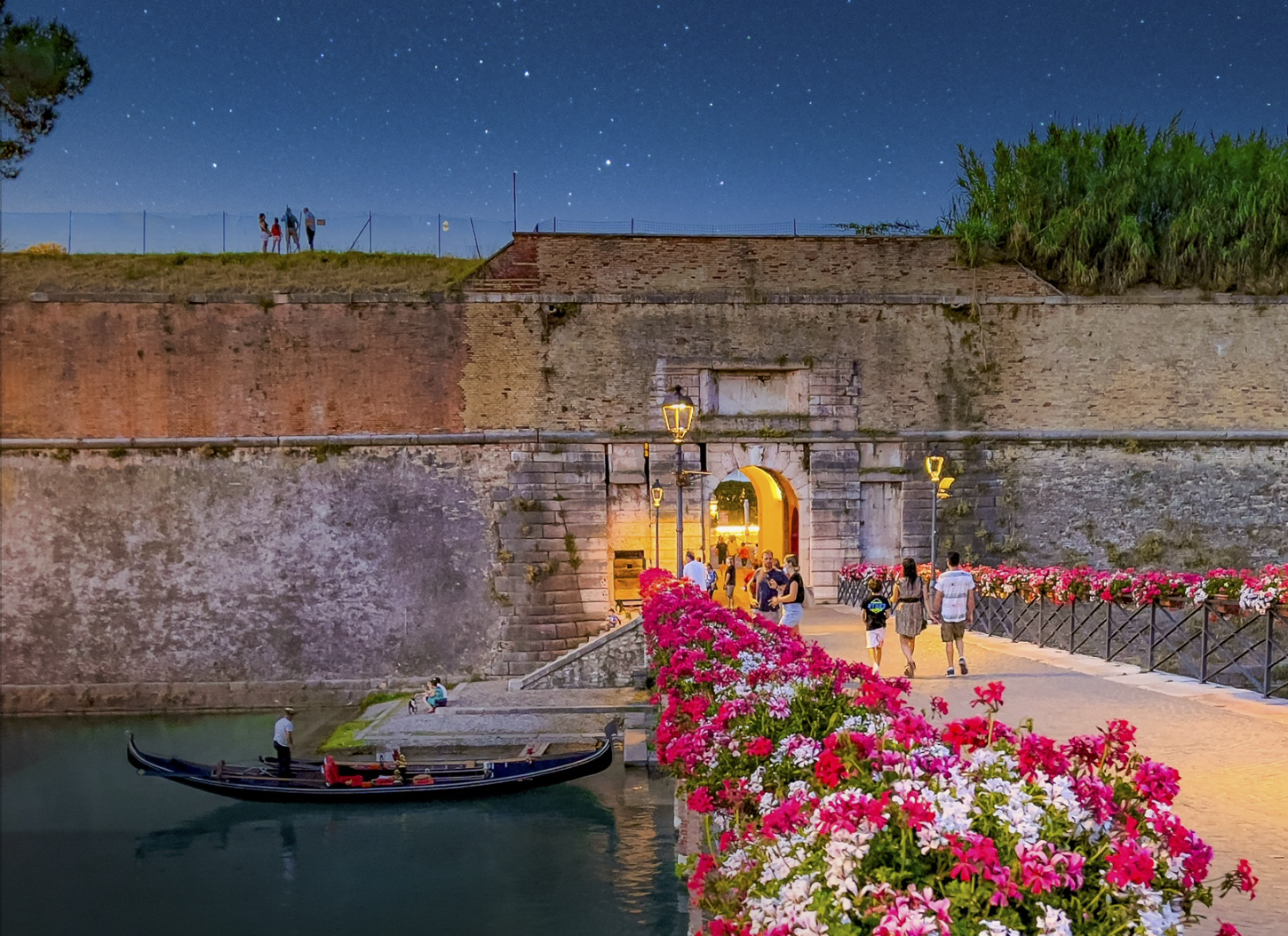
26. Porta Brescia

Porta Brescia in Peschiera del Garda, also known as the “country gate,” was the main entrance used by farmers and merchants to access the fortress.

Located in the western part of the fortified complex, it still represents one of the most evocative entrances to the town today. Its simple, compact architecture, devoid of decorative elements, perfectly reflects its original military function: ensuring control of access and defending the city perimeter.

As you approach the gate, you can already glimpse the imposing 16th-century bastion standing just ahead. This massive defensive structure, with its thick and sloping walls, is protected by a wide moat which, together with the other three canals, forms a complete system of defense surrounding the entire fortress. The moat, in addition to its defensive purpose, also helped regulate access to the city, making any surprise attack extremely difficult.

The bridge connecting Porta Brescia to the heart of the fortress was designed in 1760 by Anton Maria Lorna, a military engineer, and stands as an elegant example of defensive infrastructure from that era.

The bridge replaced an earlier movable crossing and today serves as a perfect viewpoint over the system of canals and walls.