
 16°C
16°C
 16°C
16°C
16°C
16°C
Discover Porta Verona and the Venetian Legacy in Peschiera del Garda: Between Majestic Architecture, Lost Symbols, and the Contrast of History and Modernity
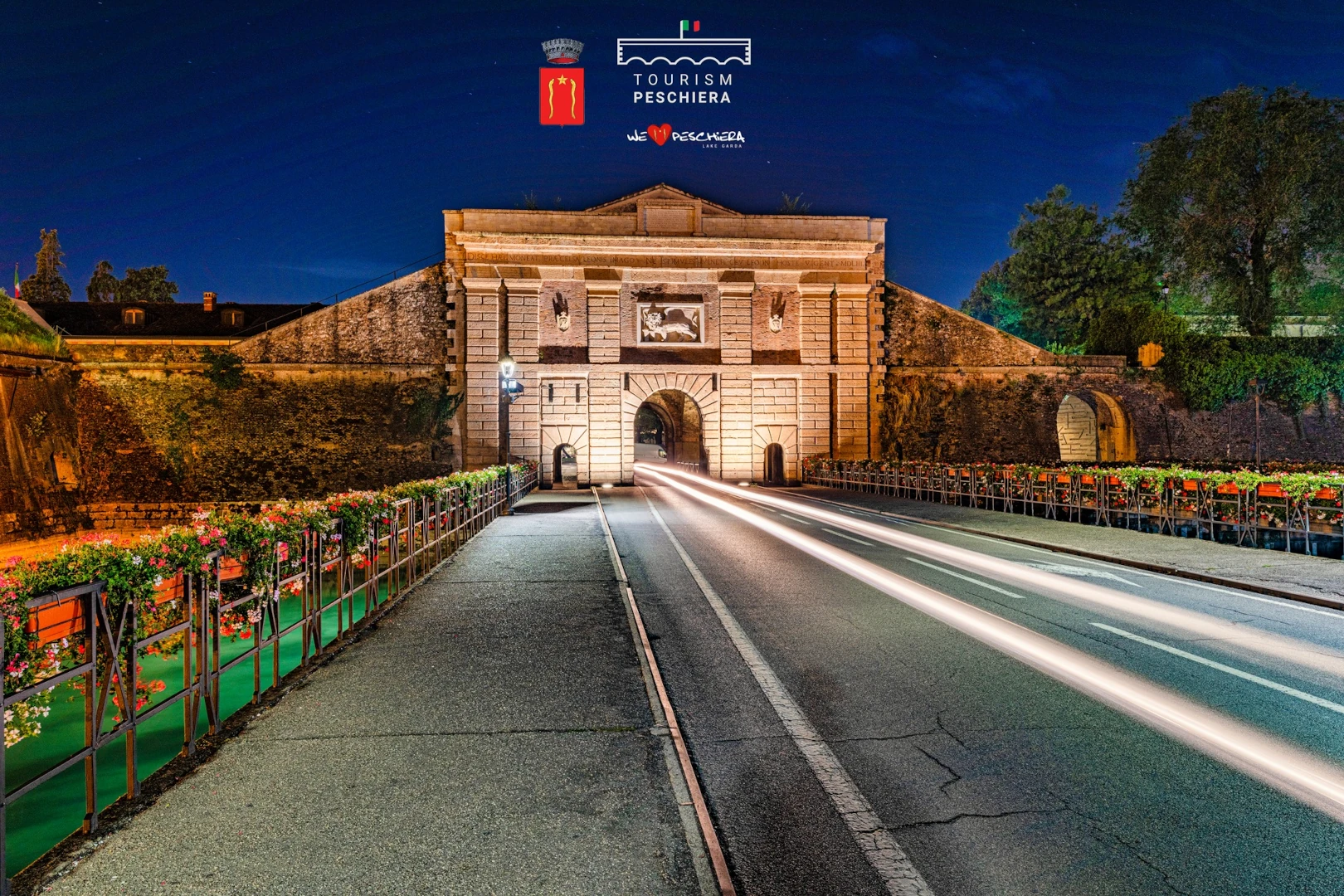
Turn your gaze toward the impressive outer façade of Porta Verona in Peschiera del Garda—it’s characterized by solemn and well-preserved architectural elements. At the center of the façade, there once stood the effigy of the Venetian Lion of Saint Mark, symbol of the Most Serene Republic of Venice. This figure, carved in stone, represented Venetian authority and prestige throughout the fortress area. However, it was destroyed by Napoleon after the Treaty of Campo Formio in 1797, as a deliberate act of political disdain. Its removal marked a symbolic break with the Venetian past.
This reconstruction is placed at the beginning of the bridge, clearly visible to those approaching the fortress. It shows how the entire monumental structure once looked, with the lion in the center and decorative elements on the sides.
Now, as you re-enter the city through Porta Verona, keep to the right to follow the historical path. Here, Parco Catullo comes into view—an open green space that offers a moment of rest and tranquility. Next to the park is the Francesco I Barracks, built in 1822, imposing in its neoclassical form.
Today, the building houses the State Police School, yet it still preserves the grandeur of 19th-century military architecture. The contrast between the ancient fortifications and the modern spaces makes this area a fascinating part of the visit.


